Understanding Urinary Stones in Rams and Bucks
Urinary stones can cause life-threatening blockages in rams. Learn the warning signs, how feeding and water intake influence the risk, and practical prevention measures to protect your breeding animals.
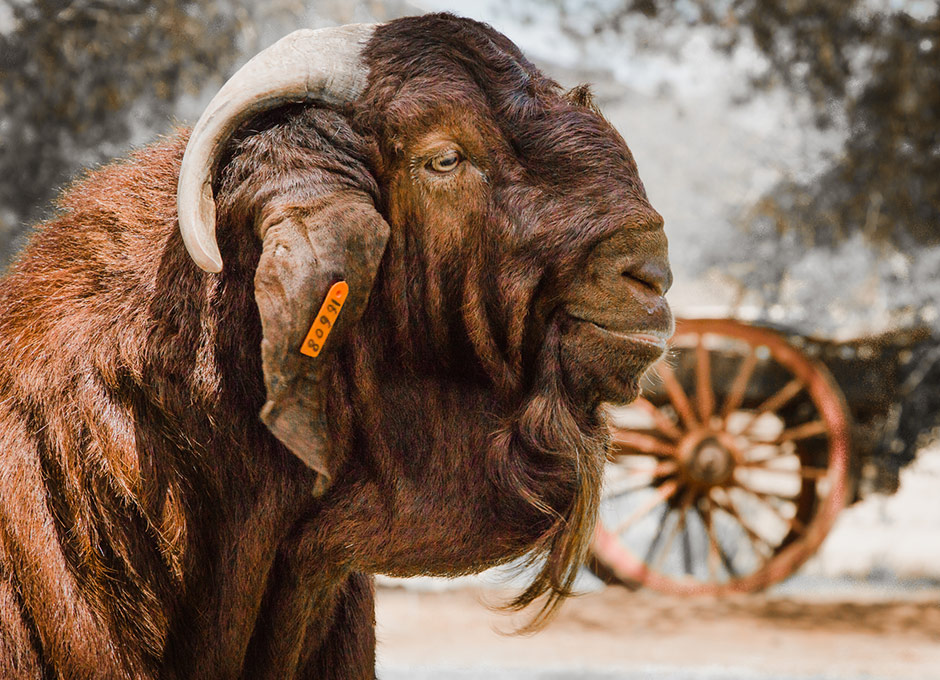
A ram repeatedly stretches, strains and looks uncomfortable. The farmer suspects constipation and waits for him to pass manure. However, the problem may be a urinary blockage and waiting can put the animal’s life at risk.
Urinary calculi, commonly called urinary stones, can affect both male and female sheep and goats, including ewes and does. However, dangerous urinary blockages are much more common in males, including rams, bucks and castrated males, because of their longer, narrower urinary passage.
For farmers keeping breeding rams, understanding the warning signs and managing feeding correctly can help protect both the animal and the flock’s breeding programme.
What are urinary stones?
Urinary stones are mineral deposits that form within the urinary tract. They may appear as small stones or sand-like material. When they become lodged in the urethra, the passage carrying urine out of the bladder which can restrict or stop urine flow.
Rams have a narrow urinary passage with bends and a small extension at the tip of the penis where stones can become trapped. The kidneys continue producing urine despite the blockage, causing pressure to build. The bladder or urethra may eventually rupture. Urine leaking into the abdomen after bladder rupture causes the serious complication commonly described as “water belly.”
How can feeding increase the risk?
A farmer may increase grain or pellets to improve a ram’s condition before breeding. Problems can develop when the total diet supplies excessive minerals, has an unsuitable mineral balance or contains too little roughage.
High-grain diets containing excessive phosphorus can encourage phosphate-based stones. Low roughage intake also reduces chewing and saliva production, affecting how phosphorus leaves the body and increasing the amount that may be excreted in urine.
However, not all urinary stones have the same composition. Some contain calcium carbonate, while others contain different minerals. Even a diet with a seemingly correct calcium-to-phosphorus ratio can create problems if total mineral intake is excessive.
This is why adding more calcium without assessing the ration is not a reliable solution.
Warning signs farmers should recognise
Watch for:
- Repeated attempts to urinate, with little or no urine.
- Dribbling instead of a normal urine stream.
- Stretching, restlessness or kicking at the belly.
- Crying, teeth grinding or other signs of pain.
- Blood in the urine.
- Loss of appetite and increasing dullness.
- Swelling beneath the abdomen or around the sheath.
Passing a few drops does not rule out a serious blockage. Check whether the ram is producing a normal stream of urine.
Straining is sometimes mistaken for constipation. A ram that repeatedly pushes or stretches should therefore be checked for difficulty urinating, rather than automatically being treated for a digestive problem.
What should you do if you suspect a blockage?
Contact a veterinarian immediately and explain that the ram is straining with little or no urine. Do not wait until his abdomen swells or he becomes unable to stand.
Keep him calm while arranging assessment. Avoid squeezing his abdomen, trying to force fluids through the urinary passage or attempting to cut the tip of the penis yourself.
Treatment must restore urine flow and address pain, dehydration and disturbances in the blood’s mineral balance. Surgery may be necessary. Clearing a blockage at the tip does not guarantee that stones farther up the passage will not cause another obstruction.
Tell the veterinarian that he is a breeding ram. Treatment choices can affect future breeding ability, and recovery requires follow-up care. Some animals develop another blockage after initial treatment.
Prevention starts with water and the whole ration
Provide clean, palatable drinking water continuously. Check troughs daily and ensure every ram can reach them. Adequate water intake helps dilute urine, reducing the concentration of minerals that can form stones.
Assess everything the ram eats: grazing, hay, grain, pellets and mineral supplements. For grain-fed animals at risk of phosphate stones, a total dietary calcium-to-phosphorus ratio around 2:1 is commonly used as a prevention target. However, this does not prevent every stone type, and excessive calcium can create other risks.
Adding maize, bran or mineral products to a formulated feed changes the balance of the overall diet. Ask a nutritionist or feed supplier to assess the combined ration instead of judging each ingredient separately.
Provide adequate roughage and match concentrate feeding to the ram’s actual requirements. Improving body condition should be done through a balanced feeding programme.
Does ammonium chloride prevent urinary stones?
Ammonium chloride can help acidify urine and may be included in a professionally formulated prevention programme. Its usefulness depends on the stone type and the animal’s response. It does not reliably dissolve every type of stone, and its presence in feed does not guarantee protection against blockage.
Use it according to professional advice and the product’s instructions. Monitoring urine acidity may be necessary to check whether the programme is working.
Ammonium chloride must never become a reason to delay veterinary treatment when a ram cannot urinate. A suspected blockage requires urgent assessment.
Make observing urination part of routine ram management, alongside checking appetite, movement and body condition. If one ram develops urinary stones, review the feed and water arrangements for the entire group, because other animals sharing those conditions may also be at risk.
Explore Topics
Written by
Setlago Rehlotse
Content creator and writer sharing insights and stories.