Heartwater: A Constant Battle for Livestock Farmers
Heartwater is a constant threat to livestock in areas such as Limpopo. Learn how effective dipping, treatment blocking, careful management of new animals and early detection can help farmers reduce losses and build a practical control program.
An animal looks healthy today, stops eating tomorrow, and dies before the farmer understands what happened. For livestock farmers in heartwater-prone areas, this can be a familiar and costly experience.
Managing heartwater is difficult because the danger does not end after treating one sick animal. The ticks remain, other animals may be exposed, and newly purchased livestock can be particularly vulnerable. Farmers need a practical program that combines prevention, observation and rapid action.
Why is heartwater such a difficult disease to manage?
Heartwater is caused by the bacterium Ehrlichia ruminantium, transmitted in South Africa mainly by the bont tick, Amblyomma hebraeum. It affects cattle, sheep and goats, with sheep and goats often particularly susceptible.
Farmers often describe high-risk areas as “heartwater red zones”. Here, that term refers informally to areas where heartwater is established. Risk varies between farms and across Limpopo; the farm’s history and local veterinary advice matter more than assuming every area carries the same danger.
Bont ticks use different hosts during their life cycle and spend time away from livestock. Animals can therefore pick up fresh ticks after dipping. Treating the flock once does not remove the tick population from the surrounding veld.
The realistic challenge is to reduce exposure while protecting vulnerable animals and detecting infections before they become advanced.
Weekly dipping: useful, but it must be done properly
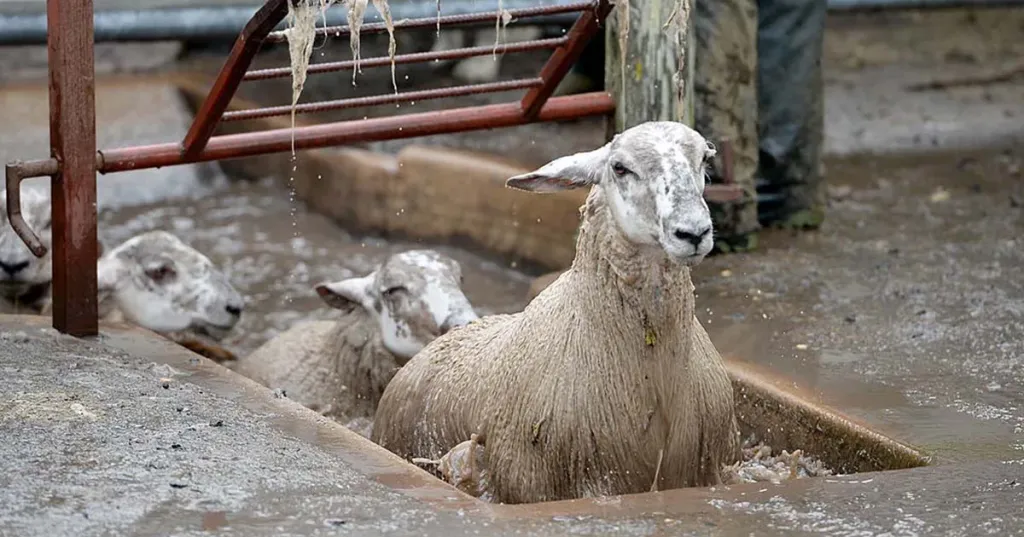
Weekly dipping or spraying may form part of a control programme, particularly when susceptible animals enter a heartwater area. However, a seven-day interval is not a universal guarantee of protection. The product’s label, tick pressure and effectiveness on the farm must guide the program.
For farmers, the practical priorities are:
- Choose the correct product. It must be registered for the animal species and suitable for controlling bont ticks.
- Measure the dilution accurately. Making the mixture stronger than instructed can harm animals.
- Apply it thoroughly. Follow the label and pay attention to attachment sites, including the belly, groin, between the legs and under the tail.
- Keep to the program. Missed animals and missed treatment dates weaken protection.
- Check the result. Look for live ticks after the product’s expected kill period.
Bont ticks attach to different body sites at different stages, so a quick spray over the animal’s back may leave important areas untreated.
If ticks persist, investigate dilution, application, equipment and reinfestation. Ask for professional assistance with suspected resistance instead of repeatedly increasing the concentration or mixing chemicals.
Dipping reduces exposure; it does not treat an infection already developing inside the animal.
Treatment blocking: where it helps and where it falls short
Treatment blocking generally means planned preventive antibiotic treatment commonly using long-acting oxytetracycline to reduce clinical heartwater in animals at risk. It may be considered when susceptible livestock move into an endemic area.
Blocking acts against the infection inside the animal. It does not kill ticks or prevent their bites. Some programs aim to manage infection while animals develop immunity, but neither protection nor immunity should be assumed.
A veterinarian should specify:
- Which animals need blocking.
- The product, dose, route and treatment interval.
- What monitoring is required between injections.
- When the program will be reviewed or stopped.
An animal showing illness between scheduled injections needs immediate assessment. The farmer should not wait for the next blocking date.
Blocking also brings medicine costs, handling and labour. Repeated preventive treatment can become expensive and difficult to sustain in larger herds.
Withdrawal periods must be observed, and antibiotic use needs a defined purpose. Blocking should be a planned intervention with a review date, rather than indefinite blanket treatment.
Why locally raised animals can still get heartwater
Animals exposed to heartwater in an endemic area may develop immunity. This can help explain why established livestock sometimes cope better than newly purchased animals.
However, living in Limpopo does not prove that an animal is protected.
“Endemic stability” describes a situation where infection circulates but sufficient immunity limits clinical disease. Establishing and maintaining this balance is difficult, and control programs can fail.
Intensive tick control may leave animals with little exposure and limited immunity. A later breakdown in control can then have serious consequences. This does not mean farmers should deliberately expose unprotected animals to infected ticks. Changes to dipping frequency should be planned with a veterinarian.
Protect new purchases before bringing them home
Buying a healthy-looking ram, buck or breeding female from a heartwater-free area can introduce a highly susceptible animal into a dangerous environment.
Before buying, ask where the animal was raised, what tick exposure it has had and whether it has a documented heartwater protection program. Arrange veterinary advice before transport.
Keep arrivals separately for observation and tick control. However, separation alone does not prevent heartwater if infected ticks are present in that camp. Agree on monitoring and protection with the veterinarian; preventive tetracyclines, tick control or immunisation may be considered for newly introduced animals.
A useful purchasing principle is to consider adaptation alongside appearance, growth and breeding value. The cheapest purchase can become expensive if protection and disease risk are ignored.
Is vaccination an option?
South Africa has used an infective-blood product for heartwater immunisation through an infection-and-treatment procedure. It involves live organisms and subsequent antibiotic treatment at specified stages. It is different from routine vaccination against clostridial diseases.
This requires veterinary supervision, strict handling and close monitoring. Ask your veterinarian about suitability and current availability before including it in the farm’s program.
Do not wait for circling before taking action
Early signs can include:
- Fever.
- Reduced appetite and dullness.
- Rapid or difficult breathing.
Later signs may include circling, tremors, abnormal movements and convulsions.
The opportunity to save an animal is often earlier than the dramatic signs farmers associate with heartwater. Treatment is more likely to succeed early; once neurological signs appear, antibiotics may be ineffective. Keep affected animals quiet and minimise disturbance.
These signs do not confirm heartwater because other diseases can look similar. Contact a veterinarian urgently and follow the farm’s agreed emergency treatment plan while diagnosis is pursued.
Oxytetracycline products are used for heartwater, but instructions differ between formulations. Correct dosing, route and treatment duration matter. Choosing the bottle with the highest concentration does not, by itself, ensure successful treatment.
After a death, ask about diagnostic sampling or a post-mortem. Repeatedly calling every sudden death “heartwater” can lead to the wrong prevention program.
Build a program the farm can actually maintain
For a farmer working with limited money, labour or handling facilities, consistency is essential. A practical starting point is to:
- Keep a working thermometer and train the person checking livestock to use it.
- Observe animals daily, especially new arrivals.
- Record dipping, treatments, illness and deaths against animal identification.
- Keep veterinary contact details and an agreed emergency plan accessible.
- Budget for prevention and emergency care.
- Coordinate tick control and reporting with neighboring farmers where grazing is shared.
Maintain nutrition, clean water and sensible parasite management as part of general animal care. These support the farming system, but they do not replace specific heartwater protection.
Review every suspected case: Was it a new purchase? Was tick control effective? Was an early warning missed? Was the diagnosis confirmed?
Heartwater remains a serious challenge in endemic areas. Farmers can reduce losses by combining effective tick control, planned protection of vulnerable animals, early detection and prompt veterinary treatment. The strongest program is one suited to the farm’s conditions and maintained consistently.
Explore Topics
Written by
Setlago Rehlotse
Content creator and writer sharing insights and stories.