Understanding the concept of subfertility in breeding rams and bucks
A ram or buck may look healthy, show strong libido and actively mate females while still having reduced reproductive capacity. Learn how subfertility can quietly undermine conception rates and why breeding soundness evaluation should form part of pre-breeding management.
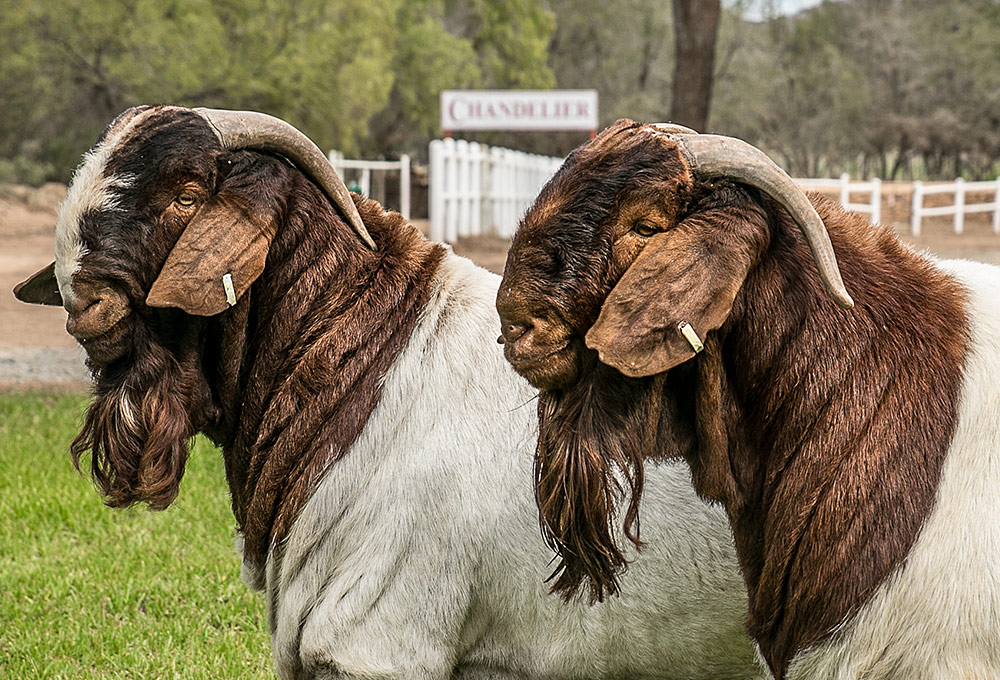
A ram can mount ewes. A buck can chase does, show strong libido and appear completely healthy. Yet when the breeding season ends, too many females may still be open.
This is one of the dangers of subfertility in breeding males.
For many livestock farmers, fertility is viewed as a simple question: Is the male fertile or infertile? In reality, reproductive performance is more complicated. A ram or buck may not be completely infertile but may have reduced reproductive capacity, meaning that he can successfully impregnate some females while failing to achieve the reproductive performance expected from a sound breeding male.
This becomes particularly important in controlled breeding systems, where one male may be responsible for breeding many females within a relatively short period.
Fertile, subfertile or infertile?
A fertile breeding male is physically and reproductively capable of successfully serving females and achieving acceptable conception within the breeding system in which he is used.
An infertile male, at the other extreme, is unable to achieve successful reproduction.
Subfertility lies between these two situations.
A subfertile ram or buck has reduced reproductive capacity. He may still produce sperm, display libido, mount females and achieve pregnancies, but his overall reproductive performance may be lower than expected.
This is what makes subfertility particularly difficult to identify on the farm.
The male may still appear to be working.
Mating activity does not prove fertility
One of the biggest mistakes farmers can make is evaluating a breeding male primarily by observing whether he mounts females.
Libido and fertility are related to reproductive performance, but they are not the same thing.
A ram or buck needs the physical ability and desire to identify and serve females, but successful reproduction also depends on the reproductive tract and the quality of the semen being delivered. A proper breeding soundness examination therefore assesses much more than mating behaviour. In rams, veterinary guidance includes physical examination, evaluation of the testes and epididymides, scrotal circumference and semen evaluation.
A male can therefore be sexually active while still having compromised semen quality.
This is why:
Seeing a ram or buck mating does not confirm that he is reproductively sound.
The real measure of a breeding male is not how many females he mounts. It is his ability to contribute to pregnancies efficiently within the required breeding period.
Why subfertility can become expensive.
Consider a farmer running 30 breeding ewes with one ram.
The ram appears healthy. He is active during the breeding season and is repeatedly seen mounting ewes. The farmer therefore assumes that breeding is progressing normally.
Weeks later, pregnancy diagnosis reveals an unexpectedly high number of open ewes.
The problem is no longer only the ram.
The farmer has potentially lost part of a production cycle.
Fewer pregnant females can mean fewer lambs or kids available for sale, fewer replacement females, lower total kilograms of offspring marketed and poorer utilisation of feed and grazing consumed by females that did not produce offspring.
Subfertility can also contribute to a less compact lambing or kidding period if females fail to conceive early and return to oestrus before conceiving later.
This is why male fertility deserves disproportionate attention. A reproductive problem in one female primarily affects that female. A reproductive problem in a male being used across many females can potentially influence the reproductive performance of a substantial portion of the flock or herd.
What can cause reduced fertility?
Subfertility is not a single disease. It can result from numerous reproductive, physical, environmental and management factors.
Possible contributors include:
Poor semen quality. Reduced progressive motility or a high proportion of abnormal sperm can compromise reproductive performance. Semen evaluation is consequently an important component of breeding soundness examination in both rams and bucks.
Testicular or epididymal abnormalities. Changes in testicular size, consistency or symmetry, as well as epididymitis, orchitis, injury and other reproductive abnormalities, can compromise fertility. Veterinary examination of the testes and epididymides is therefore important.
Heat stress. The testes must maintain an appropriate environment for normal sperm production. Research in rams shows that heat stress can adversely affect semen production and sperm quality.
Previous fever or illness. This is particularly important because today's semen reflects events that occurred weeks earlier.
In rams, spermatogenesis takes approximately 49 days, followed by another 10–14 days of epididymal maturation. In practical terms, sperm evaluated today began developing roughly two months previously.
Therefore, a ram that suffered significant illness, fever or heat stress may look clinically recovered while the consequences of that event are still reflected in his semen.
Poor body condition or nutrition. Breeding males need adequate nutritional reserves for the breeding season. Bucks, for example, can lose considerable body condition during breeding, and both inadequate and excessive condition can interfere with reproductive performance.
Feet and leg problems. Fertility is irrelevant if the male cannot effectively reach, mount and serve females. Lameness, hoof problems and structural problems can reduce breeding ability.
Injury or disease of the reproductive organs. Lesions involving the penis, prepuce, testes or epididymides may interfere with successful service or sperm production. Some conditions can permanently compromise fertility, while others may warrant treatment and later reassessment.
Don't judge a breeding male by testicle size alone
Scrotal circumference is an important reproductive measurement.
In rams, it is associated with sperm production and is included as part of breeding soundness assessment. However, interpretation needs to account for factors such as age and season.
But a tape measure alone cannot tell the whole story.
A breeding male should be evaluated as a complete reproductive package:
Physical soundness + reproductive anatomy + adequate body condition + serving ability/libido + semen quality.
A male with impressive-looking testicles should not automatically be assumed to have excellent semen.
Likewise, semen assessment without considering whether the male is physically capable of successfully mating females does not provide the complete picture.
The value of a Breeding Soundness Examination
One of the best tools for reducing this uncertainty is a Breeding Soundness Examination (BSE) performed by an appropriately qualified veterinary/reproductive professional.
For rams, the examination generally considers overall physical and reproductive fitness, the testes and epididymides, scrotal circumference and semen characteristics such as progressive motility and morphology.
For bucks, semen evaluation similarly considers factors such as progressive motility and sperm morphology, alongside the physical and reproductive examination.
The objective is not simply to label an animal “fertile” based on appearance.
It is to reduce the risk of placing reproductive responsibility for a group of females on a male with obvious evidence of inadequate breeding soundness.
Test before the breeding season, not after the damage is done
Finding out that your breeding male has a problem after pregnancy diagnosis is far less useful than identifying the problem before mating begins.
Pre-breeding examination provides time to investigate questionable findings, manage temporary problems or source a replacement male where necessary.
Goat reproductive guidance recommends routine breeding soundness examination of bucks before the breeding season, while ram BSE guidance similarly provides a framework for evaluating breeding males before they are relied upon.
This is especially important when:
- purchasing a new breeding ram or buck;
- using an expensive or genetically important sire;
- assigning many females to one male;
- using a short, controlled breeding season;
- a male recently suffered illness, fever, injury or severe heat stress;
- previous conception rates were disappointing; or
- there are abnormalities involving the testes, epididymides, penis, feet or general physical condition.
What if the male fails or receives a questionable result?
A poor result should not automatically lead to an immediate conclusion that the male is permanently infertile.
Some reproductive problems can be temporary.
The history of the animal matters.
When semen abnormalities may be temporary, veterinary guidance for bucks notes that questionable animals may be deferred and re-evaluated after a spermatogenic cycle; season can also influence semen quality.
The same biological principle is important when considering rams because sperm production and maturation occur over several weeks.
A veterinarian or reproductive specialist can therefore determine whether further diagnostics, treatment, rest and reassessment are appropriate—or whether the abnormality is sufficiently serious that the male should no longer be relied upon for breeding.
Farmers still have an important role
A BSE does not replace good breeding-season management.
Farmers should continue observing their males.
Watch whether the ram or buck:
- actively identifies females in oestrus;
- attempts and successfully completes mating;
- remains physically sound;
- develops lameness during breeding;
- loses excessive body condition;
- develops swelling or abnormalities around the scrotum;
- suffers injury or illness; and
- maintains breeding activity throughout the required period.
Breeding records are equally important.
Record which males were joined with which females, joining dates, pregnancy results and eventual lambing or kidding performance.
Without records, poor reproductive performance can easily become an impression rather than something that can be investigated.
One male can influence an entire breeding season
Farmers often invest heavily in female breeding stock and rightly so.
But the reproductive male deserves equally serious attention.
A single ram or buck can contribute genetics to dozens of offspring in one breeding season. That gives a good sire enormous value, but it also concentrates reproductive risk.
Buying a visually impressive male with excellent genetics is only part of sire selection.
He must also be capable of performing the fundamental job for which he was purchased:
getting females pregnant efficiently.
The Mashikara takeaway
Do not wait for a disappointing lambing or kidding season before questioning the fertility of your breeding males.
Evaluate them before breeding, maintain them properly, observe them during joining and use reproductive records to measure what happens afterwards.
Most importantly, remember:
A ram or buck does not prove his fertility by mounting females. He proves his reproductive value by contributing to pregnancies within the breeding period.
Subfertility can hide behind normal appearance, good libido and active mating behaviour. Identifying that risk before breeding can protect an entire season's reproductive performance.
Explore Topics
Written by
Setlago Rehlotse
Content creator and writer sharing insights and stories.